The Practice of Self-Care
Listening Inward, Letting Go, and Living with Greater Intention
In this issue, our contributing authors explore self-care from a variety of perspectives, inviting us to consider what it means to nurture, support, and care for ourselves. At their heart, these articles point to a simple but powerful idea: self-care begins with paying attention to our bodies, our needs, our inner wisdom, and the quiet truths we carry.
That kind of attention can take many forms: practicing greater self-empathy, returning to the habits and personal truths that help us feel grounded, releasing what has become too heavy, and asking the deeper questions that bring clarity to our choices.
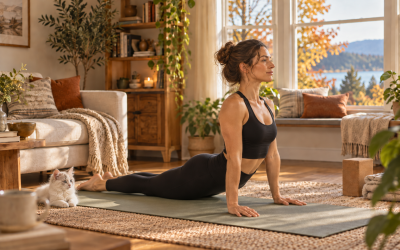
It can also mean using tools and practices such as yoga to reconnect with our bodies in the present moment, while recognizing that genuine self-care sometimes asks us not simply to soothe ourselves, but to face what isn’t working and make the changes our lives are asking of us. ❤️


Heart Like a Feather: The Self-Care of Letting Go
Self-Care Articles A Fall Equinox practice for releasing what weighs you down The Fall Equinox invites us into a major energetic shift. It is a threshold between seasons, a moment when day and night come into balance and we are reminded that life is always asking us to release, recalibrate, and begin again. This is also a powerful time to look honestly at what we are carrying. Old habits. Outgrown relationships. The need to please everyone. The belief that we have to do everything ourselves. The guilt that comes when we say no. Sometimes what weighs us down isn’t one big thing. It is the accumulation of all the little things we have been carrying for too long. And if we want to step more fully into our power, we have to be willing to put some of that weight down. What does real self-care look like? We often think of self-care as something we add to our lives: a massage, a meditation, a workout, a vacation, a healthier meal. All of these can be wonderful forms of care. But sometimes the most profound self-care is subtraction. It is knowing when to say no. It is setting a boundary without feeling the need to explain yourself. It is recognizing that someone else’s disappointment does not automatically mean you have done something wrong. It is giving yourself permission to stop carrying responsibilities, expectations, and emotional burdens that were never yours to carry in the first place. For me, this is part of what it means to have a heart like a feather. A light heart doesn’t mean a life...
Be Your Own Life Coach: 8 Questions to Ask Yourself for Self-Care and Personal Clarity
Self-Care Articles Though we often seek advice from outside ourselves, many spiritual traditions teach that the answer lies within. These queries can help you gain clarity in almost any situation. Just pick a challenge you’re trying to get through or understand better, and apply one or more of these questions. Then, be willing to act on what your inner wisdom reveals. 1. Is this good for me? This question needs to underlie every personal decision, whether it’s how to respond to a job offer or what to choose from a restaurant menu. So many of our choices are either snap decisions (i.e., no thought at all) or the process is complex and belabored: ask a friend (and another and another), make a pros and cons list, throw the I Ching. While such processes have a place, you can simplify things quite a bit by simply asking yourself if this is genuinely good for you – physically, mentally, and spiritually, today and next week and ten years from now. Because your inner being is invested in looking after your genuine interests — not just what your ego is craving at this minute — you’ll get the guidance you’re looking for. 2. What does my body have to say about this? We come from a culture that has long mistrusted the physical body. It’s been seen as the stepchild of the soul, a necessary evil, a confusing juxtaposition of God’s handiwork and the devil’s playground. It is, rather, a vortex of intelligence. Every cell and the millions of atoms comprising each one come equipped with awareness. Your body has something...
Reset with Personal Truthz
Self-Care Articles I don’t know about you, but I need a personal reset. And not the kind I used to do when I was in my twenties. At twenty-four, I was at the start of a three-year psychic healer apprenticeship that included studying spiritual psychology. My teacher introduced what he called High Gear Week, designed to tighten our practice and raise our vibration. No news, no sugar, no junk food, no alcohol, no caffeine, no gossip, no complaining, no television, no sleeping in. We added meditations, hikes, clean eating, clean conscience, clean living all around; be your best self for seven straight days. It was an aspirational sprint. The “High” in High Gear was an idealized version of humanhood running at full capacity with all the right habits locked in and all the wrong ones locked out. Like auditioning for sainthood for one week every three months. You had to fire yourself up to commit to it and get even more fired up to see it through. And I can’t say there was any downside to it. It was definitely invigorating and made me feel like I could do anything I put my mind to…for a week anyway. The reset, which used to be about all the things I had to stop doing, is now led by all the things I need to resume doing. Twenty-four-year-old me needed a list of no’s to get me aligned. This version of me? She needs a list of yes’s. Over the years, the yes’s have changed for me too. My dharma teacher has a phrase: a little too loose, a little...
Self-Care: The Life You Don’t Need to Escape From
Self-Care Articles The Bath Imagine this… soft lighting, candlelight reflecting a warm glow. A soft lavender scent envelops you. You sink into warm, bubbly water and feel the tension leave your body. Ahhh — a balm for the stressed and worn out among us. Self-care at its best. Or is it? I love a good bath, a night of TV to avert my gaze from the world. But something shifted. That kind of self-care was no longer enough. I still felt empty. Life was still a shambles. The world remained chaotic. My search began for something deeper and more powerful. On Facebook, an account called Nepenthe shared these words from writer Brianna Wiest that spoke directly to my unease: “True self-care is not salt baths and chocolate cake, it is making the choice to build a life you don’t need to regularly escape from. And that often takes doing the thing you least want to do.” Ow. Here I was, happily indulging in what I called self-care — and it may not have been the balm I was searching for. Interestingly, the word nepenthe refers to a substance that makes you forget sorrow or pain, originally a mythical “drug of forgetfulness” in ancient Greek literature. The wellness industry has grown enormously in recent years, and with that growth, self-care is sometimes marketed as a lifestyle we need to buy rather than a practice we can build. There is nothing wrong with seeking comfort or enjoying products and experiences that help us feel better. But when self-care becomes only a way to soothe ourselves, it can distract us from...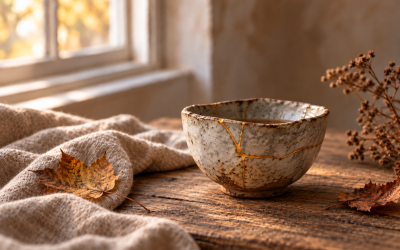
8 Tips to Build Self-Empathy & Stop Beating Yourself Up
Self-Care Articles How you treat yourself profoundly affects your health and well-being. As a psychiatrist and empath, I am fierce about my own self-care practices and teach these principles to my patients. I feel so strongly about them because I want to keep enjoying the extraordinary gifts of sensitivity—including an open heart, intuition, and an intimate connection with spirituality and the natural world. Shallow emotional waters don’t appeal to me. I love going deep—and my sensitivities take me there. A big challenge for all sensitive people is how to be compassionate without absorbing the stress of others and the world. We don’t have the same filters as most people. We are emotional sponges who feel everything and instinctively take it in. This differs from “ordinary” empathy, where your heart goes out to others in pain or happiness, but you don’t take on their feelings. Another challenge for sensitive people is to have empathy for themselves. What is self-empathy? Why can it seem so elusive when it is so good for us? It often seems so much easier to have empathy for others than for yourself. Self-empathy is a commitment to being caring rather than shaming or punishing yourself, especially if you’ve made a mistake. Maybe your first impulse is to push too hard or get impatient with your progress. Or you might beat yourself up for falling short at work or when communicating with a loved one. Or you are too quick to hate or blame. Without self-empathy, these are no-win situations. That’s why self-empathy is so vital to becoming a healthy, empowered empathic person. Because of the...