

What makes a new beginning actually new? It’s not the calendar. It’s not the resolution. It’s the daily practice of becoming someone you weren’t the day before. Each year, for the last 35, that’s taken the form of one thing I commit to every day for a year. I usually start identifying what it will be in November, when I get that hankering for change and look for what needs transforming. By the start of the new year, I’ve been practicing it already.
There’s always a practice to transformation—like a concerto pianist doing her finger exercises. The amount of time a professional musician practices is four to six hours a day on average. That’s what it takes to be up to snuff in a concert performance. Amazing, isn’t it? They live and breathe their excellence. Personal work is similar, in that the practice needs to not just be daily but in your every movement.
1996
In 1996, I committed to washing the dishes and having them dried and put away before I went to bed. How that affected me throughout the day was in being more mindful of all my time in the kitchen. After a few weeks, I found myself cleaning up as I went along rather than leaving it to the end of the meal (or end of the day). I soon noticed myself being more conscientious and less sloppy in other areas of the house. Remarkably, it even unwound a particular set of my long-standing procrastination habits without me having to think about it.
By springtime, I had grown to love the joy of meeting a sparkling kitchen in the morning. That isn’t to say there weren’t late nights after dinner parties when honoring my daily routine felt like it was going to kill me! And I can’t honestly say that in the beginning I achieved the goal on some of those evenings. But I stayed true to my intentions and by autumn—and ever since that year—my kitchen has been clean before I go to bed. For real!
2010
In 2010, my daily practice was being aware of my defenses with the goal to rid myself of them altogether. Lofty, you might say, unattainable, for sure, but as a result, I’m nothing like the quick-to-defend person I was back then. The way I would argue with folks in my head as a practice to be able to make my point at a later date? I don’t miss that at all. That process started by reading Hold Me Tight: 7 Conversations for a Lifetime of Love by Sue Johnson. It’s written as a relationship book for couples to read together (and I highly recommend it for that).
However, I was interested in it for another reason. Featured in the book is what she calls “Demon Dialogues,” where Johnson describes three pairings that lead to destructive interaction loops couples get stuck in with each other. I read and reread the book during the first part of the year, owning my part in each side of the patterns described, which gave me six different ways to dismantle my defensive behavior.
Through that course of study and practice, by mid-year, my awareness had gone beyond the book’s teachings. I learned to sense the tension that lived underneath my defenses, and to engage with it consciously before it could act out. That awareness of my body tension led me to have agency over my actions in a way that has paid itself forward in my personal life to this day. It also became a backbone in my private practice work by teaching the technique to others.
That year, my relationship improved, my stress levels went down, my worry mind melted, and my sense of humor came back. It was a very good year indeed!
2025
Last year, my practice was to wash my face each night before going to bed (sheepishly, I admit I never used to do that) and in the morning to put some concealer around my eyes and a bit of blush on my cheeks to look fresh for my clients. I no longer take my regular Hawaii retreats (a story for another article) so my fresh tan and natural blush have uniformly paled. I caught myself in the mirror one day and saw the lackluster look of my skin and decided I would like to do something about that. Who knew washing my face twice a day could bring back such supple texture and glow? I loved the results. Needless to say, I’ve continued the ritual and added these cute little eye masks to my evening practice that my partner says make me look like a hummingbird. They add another dimension to the glow and now I require less concealer. TMI?
What that led to, funny enough, was more time looking in the mirror than I think I have done my entire life put together! No joke. The mirror was never my point of interest. And in looking in the mirror, I became aware of a lot of self-criticism. By November, I was ready to tackle what the mirror had revealed.
2026
So, this year, my daily practice starts with looking in the mirror, and it is twofold: 1.) Dissolve the negative narrative that runs internally. Note the lofty unequivocal way I state that! And 2.) Implement a series of positive narratives that I voice out loud and direct to myself.
For the negative self-talk, I began catching and redirecting the internal dialogue. I first apologized to myself and then replaced it with a positive phrase. In the mornings, I noticed I was waking with a story from the past whose outcome I regretted. I started applying all the tools I teach, in particular a “Revisioning Exercise” I learned from Neville Goddard. In it you reimagine a situation unfolding as you had hoped it would and see yourself and others making different and better choices. He calls it a “Forgiveness Exercise.” I have several tools to combat negative thinking, and I’ve been applying all of them every time I catch myself running a negative scenario, making negative comments about myself, or replaying past losses. (Email me if you’d like the list.)
For the positive narrative, I committed to treating my physical body with the same affection and verbal talk that I give to plants and animals. When I water my plants, I fluff their leaves, tell them they’re pretty, and ask what they need. I recall the touch and tenderness I gave Uli and River, my beautiful little furry babies, when they were alive. I was always petting them, telling them they were “good girls,” asking them what they needed, and honoring their efforts and attention. I spoke in a high voice of approval that made them happy, and a low one for safety that calmed them. It was all very audible. And now I do that for myself.
The way I’m doing this positive talk is straight to the physical body. I’m not thinking about judgments or thoughtforms or believing it or not believing it. I’m bypassing my mind altogether and speaking directly to the soma, the tissue, the flesh and bones. With this part of the practice, I’m not talking to my mind. I’m talking to my body.
Today
I’m still immersed in the unfolding experience but have already discovered an increase in productivity, a reduction in stress-related tasks, an increase in my overall sense of well-being, and a much, much, much quieter mind.
My dishes practice wasn’t just about a clean kitchen. My undefended-self practice wasn’t merely about arguing less. My mirror practice wasn’t really about skincare. Each one, in its own right, was an invitation to meet a part of myself I had been avoiding, and to allow that meeting to deepen enough to change me. It took having each of these practices mindfully embodied each day, throughout the day, to get to that deeper level where they’d exist interwoven into the fabric of my life and lifestyle. Plus, it was easier to have the practice embedded throughout my day than to find the time to do it. Think about that…
The practice of awareness, the consistency building momentum, the clarity and simplicity making it easy to stay focused—all of these, and more intangibles, make my relationship to myself the biggest influence in my life.
That’s the difference between improvement and transformation. Improvement adjusts the behavior. Transformation follows the behavior inward, to whatever it’s protecting, and lets that be seen, unwound, and transformed into a new self. Not once, not in January, not in spring, but throughout the day, every day, every year, until the gift of the practice becomes who you are.
That’s where the “new” in “new beginnings” actually lives. In the tending that happens throughout the day, affirming your deepest desires, sacrificing unconscious moments for conscious ones; intentional, faithful caring as you practice showing up for yourself anew.
© Copyright 2026 Dr. K.D. Farris. All Rights Reserved.
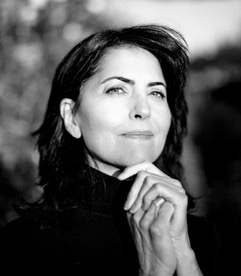
Doctor of Depth Psychology, writing, speaking & teaching on the practical application of key concepts and processes. Author of MESHE, HESHE, MISON & ORBIT: What My Grandmother Taught Me About the Universe—a spiritual coming of age story set in 1960’s Hawaii for the 13-year-old in all of us. Now available on Audible.com.