I realized last night, poised to rinse out the blender, that I really love my husband. As his voice intercepted my domestic tasking, I heard words that were meaningful to him but that I would have to translate and unravel. It was, nevertheless, clear to me that I love without question the man I married 28 years ago and the man he is today. The only thing is, they’re different.
William has aphasia, destruction of parts of his brain that deal with words and, in his case, numbers. It is the nasty souvenir of a 2023 stroke and several smaller CVAs and seizures, not at all small, for the next two-and-a-half years. They have now figured out the meds that, knock-on-wood/fingers-crossed/prayers-said, will prevent more seizures from happening. He even has a detection watch that would supposedly call my phone if he were having a seizure when I was out or in another room. I trust that it would work. It seems these days that I’m trusting quite a bit.
Communicating with a person who has aphasia is like attempting to converse with someone who knows something of a language you speak—maybe they had two years in high school thirty years ago—but not enough to make for a seamless exchange. In William’s case, small talk is doable—just like those high school language classes: Ola!…Bon jour…Ni hao… But coming up with specific terms or, heaven forbid, proper names involves the substitution of a term that bears no relation to the one he’s looking for, or he makes up a word altogether.
It’s frustrating to me because words are my portal to existence. A year ago, I Googled upon a condition called non-verbal learning disorder and promptly diagnosed myself with it. People like this, like me, excel at language. We’re writers and poets and orators, sometimes great ones, but we can’t do anything else.
In my case, I’ve known since childhood that I’m wired to read, write, and speak. I’m hopeless at math, music, the visual arts, mechanics, technology, and athletics. My idea of hell is receiving a purchase I have to put together, compounded if the instructions are in pictures. In the old days, when we got directions from other people and someone would offer to draw me a map, I’d feel a surge of panic. Plain old spoken or written directions, even when as cryptic as “Turn left where the old tree burned down,” I could use.
So, here we are, William and I, a couple once madly and blissfully in love, now an odd couple indeed. I need words. I’ve called our go-arounds of trying to understand each other “death by charades” (not a game for which I ever had much fondness, but come to think of it, the only game I ever liked was Scrabble). William, on the other hand, often can’t access words.
Did I say I was frustrated? His frustration is enormous, justifiable, and agonizing. This is a man who graduated 3rd in his class at law school, who wrote two books (published) and three screenplays (we’re still hoping on those), and who founded the Compassion Consortium. That’s a nonprofit to serve the spiritual needs of animal advocates, and it will be operative and helpful and transformational long after we’re gone.
But in the day-to-day, “fork” might mean “pen,” pronouns are sure to be transposed, and if we’ve been watching the news, William might say “Trump” when referring to our dog or the sofa or a sandwich. Aphasia’s harshest blow, and separating it from dementia, is that a person with aphasia is acutely aware of what is going on and what they want to say.
Sometimes, especially when times and dates are the issue, William is certain that the word he says is the one he intended, and that I claim not to understand simply to be annoying. “I’m going down to use the treadmill at 1,” he told me yesterday at twenty past 4. “Okay,” I said, “but I think you mean 5.” “That’s what I said, 1 o’clock.” “You mean 5 o’clock, Honey.” “That’s what I keep saying: 1 o’clock! I just can’t talk to you. I’ll never talk to you again.”
And I’m beating myself up for not responding, when he first mentioned the treadmill, with, “Okay, have a good workout.”
And yet last night at the kitchen sink, it struck me that I love my husband deeply and profoundly. I am in love with my husband. It’s not the passionate, new-romance experience we had 30 years ago, but he’s my partner. My truelove. Soulmate maybe, if there are such things.
And that caused me to consider: Who or what is it that I love so much? If you’d asked me that early in our relationship, I’d have said, “He’s incredibly good-looking,” and he still is. He has steely blue eyes and shiny gray hair that hasn’t thinned by a follicle, as far as I can tell.
And I’d have said, “He’s lived all over the world. He put ‘art, music and fine dining’ in his singles ad.” Well, he has lived in all those places, although these days he sometimes asks me the name of one or more of them. He hasn’t played music in several years, or taken a walk in Central Park, a place he once loved…and knew so well that his daughter christened him Ranger Bill.
This man I love has lost a great deal of himself, including chunks of what we think of as the very organ of selfhood, his brain. And yet, I love him like crazy, and it’s not about eyes and hair. It’s about soul.
Philosophers and scientists can argue whether or not there is non-local consciousness, awareness not strictly produced by the brain. For me personally, non-local consciousness is a given. I understand that both the heart and the gut provide the brain with admirable backup while we’re in physical life, and I feel certain that something beyond the physical, the real being of a being, is not dependent on a physical vehicle at all.
That’s how I stay in love with William. I love him for his essence, not only who he is now and who he was in the past, but what he has been eternally and will eternally be. I think he feels the same about me.
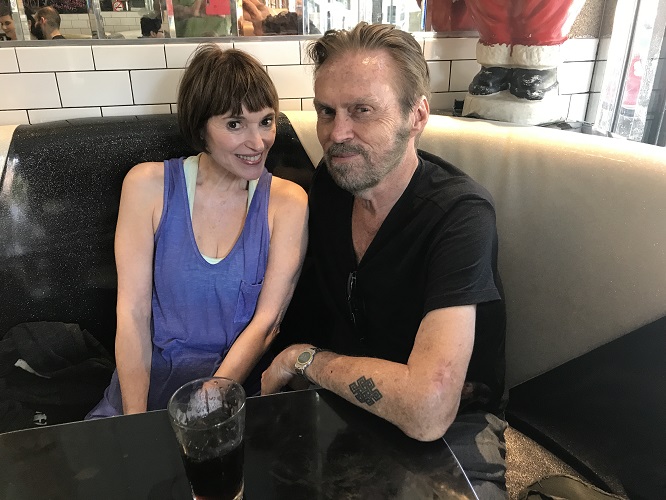
On Valentine’s Day, we celebrate the flutters and blushes and butterflies of romance, but also the solidity of love that’s soul-to-soul. Old age doesn’t muffle it, nor does familiarity or sickness, loss or grief, rotten luck or death itself. Love is the super-power of the universe. When we love, we partake of that power.
I’m grateful for every conversation William and I had when conversation was something we took for granted. I’m grateful for every joke we shared when joking came easy. I’m grateful for every discussion that got heated and every debate neither of us won, because through all of these, I came to know the soul of my mate. And soul-to-soul, we really can be in love forever.
© Copyright 2026 Victoria Moran. All Rights Reserved.
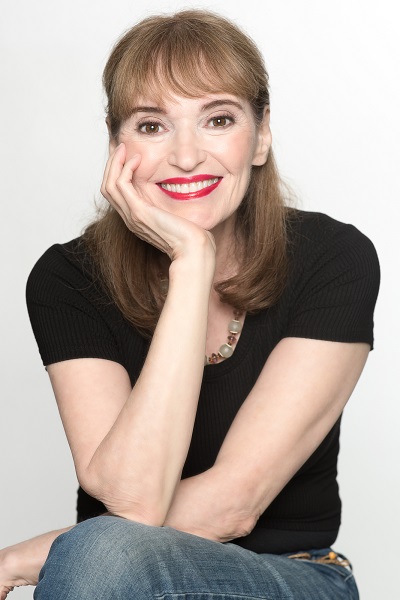
Victoria Moran, victoriamoran.com, Is the author of 14 books, including the international bestseller Creating a Charmed Life and her latest, Age Like a Yogi. She lives in New York City with her husband, Rev. William Melton, and both are cofounders of the Compassion Consortium, an online interfaith ministry to meet the spiritual needs of animal advocates. Find Victoria on IG @VictoriaMoranAuthor and YouTube @VictoriaMoranOfficial