
As I write about emotional empaths in my many books, I describe them as a species unto themselves. Whereas others may thrive on the togetherness of being a couple, for empaths like me, too much togetherness can be difficult and may cause us to bolt.
Why? We tend to intuit and absorb our partner’s energy and become overloaded, anxious, or exhausted when we don’t have time to decompress in our own space. We’re super-responders; our sensory experience of relationship is the equivalent of feeling objects with 50 fingers instead of five. Energetically sensitive people unknowingly avoid romantic partnerships because deep down, they’re afraid of getting engulfed. Or else, they feel engulfed when coupled, a nerve-wracking, constrictive way to live.
If this isn’t understood, empaths can stay perpetually lonely. We want companionship, but paradoxically, it doesn’t feel safe. One empath patient told me, “It helps explain why at 32 I’ve only had two serious relationships, each lasting less than a year.” Once we empaths learn to set boundaries and negotiate our energetic preferences, intimacy becomes possible.
For emotional empaths to be at ease in a relationship, the traditional paradigm for coupling must be redefined. Most of all, this means asserting your personal space needs — the physical and time limits you set with someone so you don’t feel they’re on top of you. Empaths can’t fully experience emotional freedom with another until they do this.
Your space needs can vary with your situation, upbringing, and culture. My ideal distance to keep in public is at least an arm’s length. In doctors’ waiting rooms, I’ll pile my purse and folders on the seats beside me to keep others away.
With friends, it’s about half that. With a mate, it’s variable. Sometimes it’s rapture being wrapped in his arms; later, I may need to be in a room of my own, shut away. One boyfriend who truly grasped the concept got me a “Keep Out” sign for my study door! For me, this was a sign of true love.
We all have an invisible energetic boundary that sets a comfort level. Identifying and communicating yours will prevent you from being bled dry by others. Then intimacy can flourish, even if you’ve felt suffocated before.
Prospective mates or family members may seem like emotional vampires when you don’t know how to broach the issue of personal space. You may need to educate others — make clear that this isn’t about not loving them — but get the discussion going. Once you can, you’re able to build progressive relationships.
If you’re an empath, or if the ordinary expectations of coupledom don’t jibe with you, practice the following tips.
Define Your Personal Space Needs
Tip 1. What to Say to a Potential Mate
As you’re getting to know someone, share that you’re a sensitive person and that you periodically need quiet time. The right partner will be understanding; the wrong person will put you down for being “overly sensitive” and won’t respect your needs.
Tip 2. Clarify Your Preferred Sleep Style
Traditionally, partners sleep in the same bed. However, some empaths never get used to this, no matter how caring a mate. Nothing personal; they just like their own sleep space. Speak up about your preferences. Feeling trapped in bed with someone, not getting a good night’s rest, is torture.
Energy fields blend during sleep, which can overstimulate empaths. So, discuss options with your mate: separate beds, separate rooms, or sleeping together a few nights a week. Because non-empaths may feel lonely sleeping alone, make compromises when possible.
Tip 3. Negotiate Your Square Footage Needs
You may be thrilled about your beloved until you live together. Experiment with creative living conditions so your home isn’t a prison. Breathing room is mandatory. Ask yourself, “What space arrangements are optimal?”
Having an area to retreat to — even if it’s a closet, a room divider, or separate bathrooms — can help. Separate houses may even be an option.
Here’s why: conversations, scents, coughing, and movement can feel intrusive. Even if my partner’s vibes are sublime, sometimes I’d rather not sense them, even if they’re only hovering near me. I’m not just being finicky; it’s about maintaining my well-being if I live with someone.
Tip 4. Travel Wisely
When traveling with someone, you may want to have a separate space too. Whether my companion is romantic or not, I’ll always have adjoining rooms with my own bathroom. If sharing a room is the only option, hanging a sheet as a room divider will help. “Out of sight” may make the heart grow fonder.
Tip 5. Take Regular Mini-Breaks
Empaths require private downtime to regroup. Even a brief escape prevents emotional overload. Retreat for five minutes into the bathroom with the door shut. Take a stroll around the block. Read in a separate room.
One patient told her boyfriend, “I need to disappear into a quiet room for ten minutes at a party, even if I’m having fun,” a form of self-care that he supports.
In my medical practice, I’ve seen this creative approach to relationships save marriages and make ongoing intimacies feel safe, even for emotional empaths (of all ages) who’ve been lonely and haven’t had a long-term partner before. Once you’re able to articulate your needs, emotional freedom in your relationships is possible.
Adapted from Dr. Judith Orloff’s book, “The Empath’s Survival Guide: Life Strategies for Sensitive People” (Sounds True, 2017).
© Copyright 2026 Dr. Judith Orloff. All Rights Reserved.
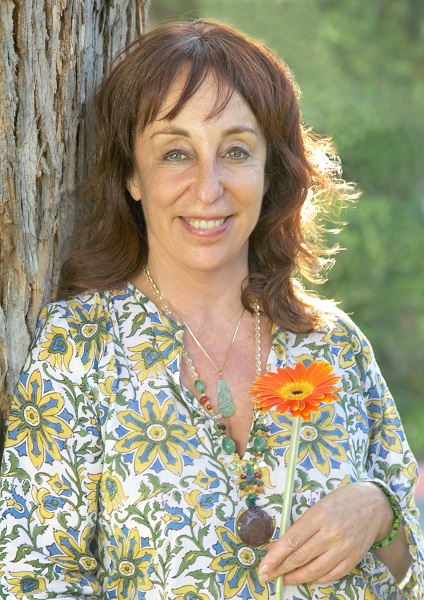
Judith Orloff, MD is a New York Times bestselling author, a psychiatrist, and an empath. She is the author of the new children’s book “The Highly Sensitive Rabbit,” which tells the story of a caring cottontail who is shamed for her sensitivities but then learns to embrace them. Dr. Orloff’s other books include The Genius of Empathy, The Empath’s Survival Guide, and Thriving as an Empath. Dr. Orloff also specializes in treating highly sensitive people in her medical practice. Dr. Orloff’s work has been featured on The Today Show, CNN, Oprah Magazine, the New York Times, and USA Today. Dr. Orloff has spoken at Google-LA and TEDx. Dr. Orloff has spoken at Google-LA and TEDx. Explore more at www.drjudithorloff.com.